If you’re wondering how do I get a cashier’s check, start with your bank or credit union. You’ll usually need identification, the payee’s exact name, and enough money to cover the payment and fee. Many banks issue the check at a branch, while some let customers order one online. Also worth reading: Franchise Attorney.
A bank-backed check can be useful for a car purchase, home closing, security deposit, or another large payment. The bank takes your money first and then issues the payment from its own funds. That gives the recipient more certainty than a standard personal check.
Cashier’s Check at a Glance
| Question | Quick answer |
|---|---|
| Where can you get one? | Usually your bank or credit union |
| What should you bring? | Photo ID, payee name, payment amount, and sufficient funds |
| Can you get one online? | Some financial institutions allow online orders |
| Is there a fee? | Often, although fees vary by bank and account |
| Do you need a bank account? | Usually, but policies vary by institution |
| Is it suitable for large payments? | Yes, it is commonly used for higher-value transactions |
| Can it be replaced if lost? | Often, but replacement may involve paperwork and delays |
Quick answer: To get a bank-issued check, contact your bank or credit union and confirm its requirements. Provide the recipient’s exact name, payment amount, identification, and funding. Pay any required fee, review the printed details carefully, and keep your receipt until the recipient deposits the check.
How Do I Get a Cashier’s Check? Follow These 5 Steps
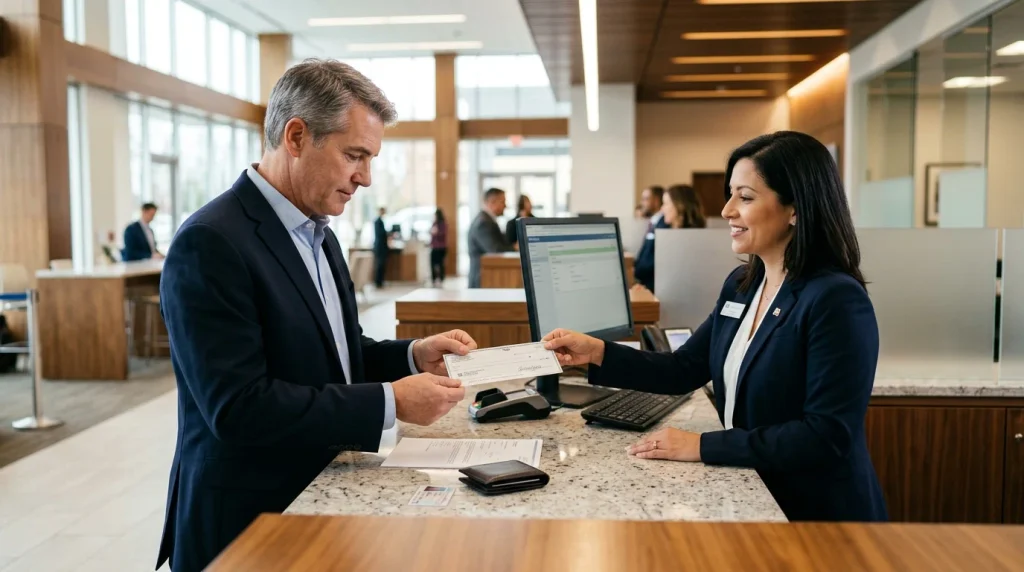
Getting an official bank check is usually straightforward if you already have a checking or savings account. Requirements vary between financial institutions, so checking your bank’s policy first can save time. Follow these steps to avoid common delays.
1. Confirm the recipient and exact payment amount
Ask the recipient how their name should appear on the payment. This detail matters because banks generally issue these checks to a named person or business. You should also confirm the exact dollar amount before visiting your bank.
For a home purchase, your title or escrow company may provide specific payment instructions. A vehicle seller or landlord may also specify exactly how the payee should appear. Double-check those instructions before requesting the check.
2. Check your bank’s requirements
Call your bank, check its website, or use its mobile app before visiting a branch. Confirm whether your account qualifies and whether the service carries a fee. You can also ask whether the check can be ordered online.
Policies differ considerably among U.S. financial institutions. Some banks require an eligible checking or savings account before issuing the payment. Others may also provide online ordering for qualifying customers.
3. Gather your ID and enough money
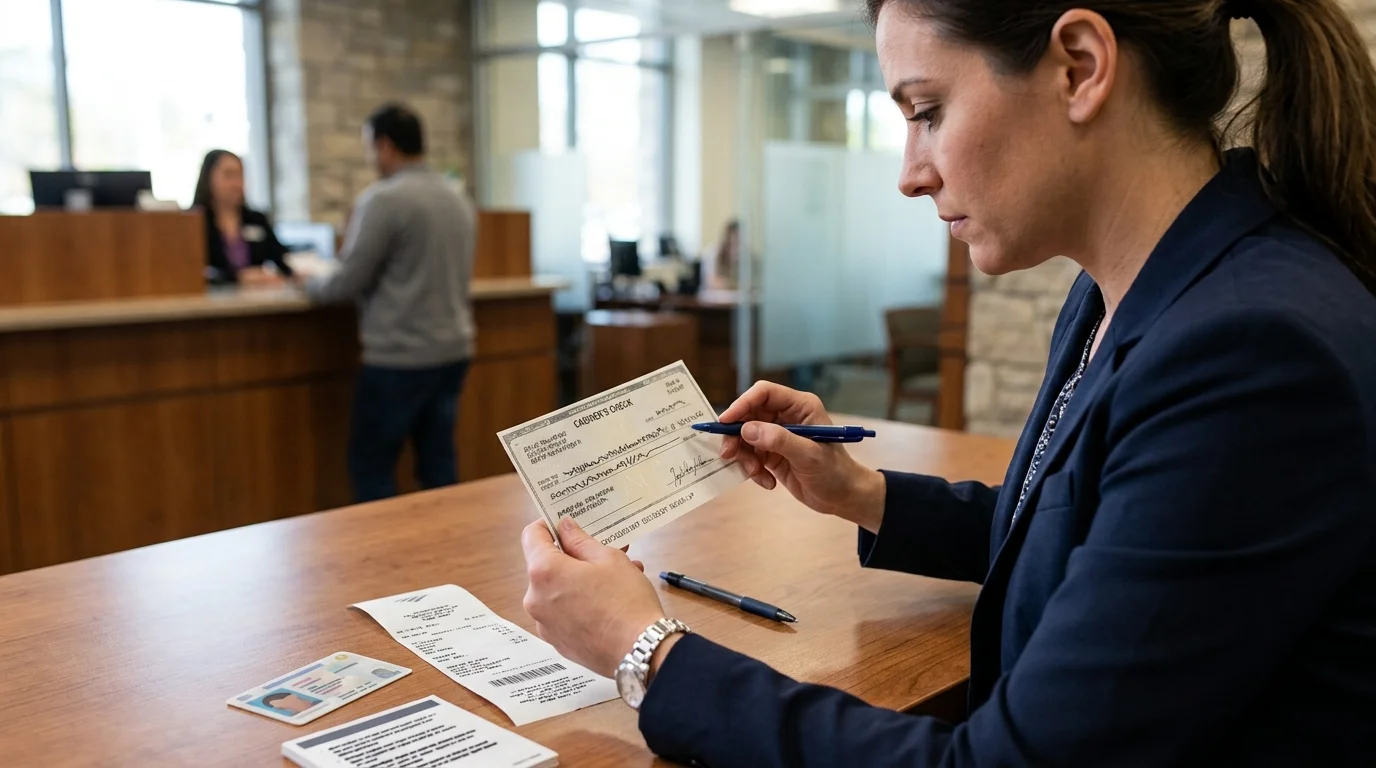
Bring a government-issued photo ID if you plan to visit a branch. You also need enough available money to cover the full payment and any applicable bank fee. Your institution may request additional information depending on the transaction.
The bank typically withdraws the payment amount when it issues the check. This differs from a personal check, where funds remain in your account until processing occurs. Make sure the necessary balance is available before placing your request.
For business owners, separating personal and company expenses can make larger payments easier to document. Bussinify’s guide to supporting small businesses also discusses financial constraints and other challenges that affect smaller companies. Good records can help when a major purchase or business payment needs documentation.
4. Purchase the check
Ask a teller for an official bank check and provide the required information. Some banks also support orders through online banking or a mobile app. Online availability depends on your financial institution and account type.
Review the recipient’s name and dollar amount before leaving the branch or confirming an online order. A spelling mistake can create problems when the recipient tries to deposit it. Fixing an error afterward may take considerably longer.
5. Keep your receipt and deliver the payment securely
Your bank should provide a receipt or other record showing the transaction details. Keep that documentation until you know the recipient successfully received and deposited the payment. The receipt may also contain information useful for tracking the check.
Treat the physical check much like cash during delivery. Avoid leaving it unattended or sending it through an insecure method. Replacing a lost bank check can require extra documentation and a lengthy waiting period.
What Do You Need to Get One?
The exact requirements depend on the issuing financial institution. Still, most customers should prepare several basic pieces of information before making a request. Having everything ready can make an in-person visit much quicker.
You will typically need the following.
- A government-issued photo ID.
- The recipient’s exact legal or business name.
- The precise payment amount.
- Sufficient available funds.
- Money for any applicable service fee.
- Your checking or savings account information.
- Any memo or payment reference requested by the recipient.
Ask the recipient to verify payment instructions before you purchase anything. This precaution is particularly useful for real estate and other high-value transactions. Changing an official check after issuance can be more complicated than correcting a personal check.
How Much Does a Cashier’s Check Cost?
Fees depend on your bank, credit union, and account type. Some premium accounts include official checks at no additional charge. Other institutions charge a fixed fee for each one.
Large national banks commonly publish their current official-check fees online. Charges and fee waivers can vary according to the customer’s account relationship. Online ordering may also carry a separate delivery charge.
These costs can matter when a payment is part of a larger business expense. Employees handling travel costs may also need to distinguish personal spending from reimbursable expenses. Bussinify’s explanation of what per diem means for a job covers another common method businesses use to manage employee expenses.
Fees can change, so confirm current pricing directly with your financial institution. Your account type may also qualify you for a waiver. Checking first prevents an unexpected fee when you need a specific payment amount.
Can You Get One Without a Bank Account?
Getting this payment instrument without an account can be harder. Many major banks limit the service to existing checking or savings customers. Policies at community banks and credit unions can differ.
Call nearby institutions before visiting and ask whether they serve non-customers. If none will issue the payment, consider whether the recipient accepts a money order instead. Opening an account solely for one transaction may not always be practical.
A money order can work for smaller payments because it is prepaid. However, issuers often impose lower transaction limits than banks place on official checks. Always confirm that the recipient accepts your proposed alternative before buying it.
Can You Order a Bank Check Online?
Some U.S. banks allow eligible customers to order through online banking or a mobile application. Availability depends on the institution, account type, payment amount, and delivery address. Check your bank’s current options before relying on online ordering.
Online ordering may be convenient, but delivery creates extra waiting time. It may also involve shipping charges or restrictions based on the delivery address. An in-person branch visit is often simpler when you need payment the same day.
Check delivery dates before choosing the online option. A late payment could cause problems with a closing, vehicle purchase, or rental agreement. Build enough time into your plans for possible shipping delays.
Cashier’s Check vs. Money Order vs. Personal Check
These payment methods may look similar, but they work differently. The right choice depends on the amount, recipient requirements, and available payment methods. The following comparison highlights the main differences.
| Payment method | Funds backed by | Typical use | Availability |
|---|---|---|---|
| Official bank check | Issuing financial institution | Large or important payments | Banks and credit unions |
| Money order | Prepaid funds | Smaller payments | Banks, post offices, and other issuers |
| Personal check | Account holder | Routine payments | Checking account holders |
A money order may be easier to obtain if you do not have a traditional bank account. A personal check can be convenient for routine payments when the recipient accepts it. For a large purchase, the recipient may specifically require bank-guaranteed funds.
When Does an Official Bank Check Make Sense?
These checks are commonly used when a recipient wants stronger assurance that money is available. They may appear in transactions involving vehicles, real estate, rental deposits, or other substantial payments. The recipient can still specify another payment method.
Businesses can also encounter them when buying equipment or completing a significant transaction. Entrepreneurs researching other cash-based operations can read Bussinify’s guide to starting an ATM business for a different look at managing money within a business model. Payment procedures should still be confirmed directly with the seller or service provider.
Ask before purchasing an official check because payment requirements can differ. A title company might require a wire transfer instead, while a seller may accept several methods. Confirming the required format helps you avoid buying the wrong payment instrument.
You should also verify large-payment instructions independently. Fraudsters sometimes impersonate businesses and send altered payment directions. Contact the recipient through a trusted phone number before sending substantial funds.
How to Avoid Fake Check Scams
Bank-backed checks are legitimate payment tools, but counterfeit versions exist. The Federal Trade Commission warns consumers about schemes involving fake personal checks, money orders, and official checks. A common warning sign is someone sending too much money and requesting part of it back.
Money appearing in your account does not prove that a deposited check is genuine. Banks can make deposited funds available before discovering that a payment instrument is fraudulent. The person who deposited the fake payment may later be responsible for the missing money.
Be cautious if a stranger asks you to deposit a check and return money. Do not send gift cards, cryptocurrency, money orders, or wire transfers from an unexpected overpayment. Contact your bank directly if you suspect a payment may be fraudulent.
What Happens If You Lose the Check?
Contact the issuing bank immediately if the check becomes lost, stolen, or damaged. The institution can explain its cancellation and replacement procedures. Do not assume it can instantly issue a replacement.
A bank may require an indemnity agreement or bond before replacing certain lost checks. Waiting periods can also apply under specific circumstances. These requirements make secure handling especially important for time-sensitive transactions.
Keep your purchase receipt in a safe place until the transaction is complete. It can contain details that help the bank identify the original payment. Keep a separate record of the transaction for reference.
Frequently Asked Questions
How do I get a cashier’s check from my bank?
Contact your bank and ask whether it issues official checks for your account type. Bring identification, the recipient’s exact name, and enough available money for the payment and fee. The teller can usually prepare the check during your branch visit.
Some institutions also let customers order through online or mobile banking. Online orders may require delivery time and additional charges. Check those details before using the option for a deadline-sensitive payment.
Can I walk into any bank and get one?
Not necessarily, because many banks restrict issuance to existing customers; policies differ between banks, credit unions, and individual account types. Call ahead if you plan to use an institution where you do not have an account.
A local credit union or community bank may have a different policy. You may also need additional identification when purchasing without an established customer relationship. Confirm all requirements before making the trip.
Can I pay for one with cash?
That depends on the financial institution and whether it serves non-customers. Existing customers often fund the payment directly from an eligible bank account. Some institutions may accept cash under their own policies.
Do not assume cash will be accepted for a large transaction. Call the branch and explain the amount you need before visiting. The bank can tell you what payment and identification methods it accepts.
How long does it take to get one?
An in-person request can often be completed during a branch visit when you meet all requirements. Online orders take longer because the physical check must be delivered. Processing and delivery schedules vary by institution.
If you have a firm payment deadline, ask about timing before ordering. Weekends and bank holidays can affect delivery schedules. An in-person request may be preferable for an urgent transaction.
Is a cashier’s check the same as cash?
No, although recipients may view bank-guaranteed funds as more reliable than a personal check. The payment is still a check that must be deposited or cashed. Counterfeit versions also exist, so recipients should remain cautious.
A legitimate check is issued by a financial institution after receiving the required funds. That structure reduces the risk of insufficient funds from the purchaser. It does not eliminate fraud involving forged or counterfeit documents.
The Bottom Line
Getting an official bank check in the United States usually starts with your bank or credit union. Confirm the payee, exact amount, fee, identification requirements, and available balance before making your request. Review every printed detail and keep the receipt afterward.
For urgent payments, visiting a branch may be the simplest option. Online ordering can work when your institution supports it, and you have time for delivery. For smaller payments, ask whether a money order is an acceptable alternative.
Most importantly, verify unexpected payment requests before sending money. Be especially suspicious of anyone who overpays and asks you to return the difference. Contact your bank directly when a check or payment instruction seems questionable.