DJ insurance helps protect a disc jockey business against claims, equipment damage, accidents, and other financial risks. Coverage can matter whether you play weddings, private parties, clubs, or corporate events. Many venues may also require proof of liability coverage before allowing you to set up.
The right policy depends on how you work, what equipment you carry, and whether anyone works for you. Mobile entertainers often face different risks from club residents who use venue-owned equipment. Understanding those differences can help you avoid paying for protection you don’t need.
Direct answer: Most working DJs should start with general liability coverage, especially when performing at third-party venues. Equipment coverage may protect speakers, controllers, laptops, and lighting against covered losses. Commercial auto, professional liability, cyber coverage, or workers’ compensation may also matter for certain businesses.
| Coverage area | What it generally addresses | Who may need it most |
|---|---|---|
| General liability | Third-party injuries and property damage | Most mobile and event DJs |
| Equipment/property | Covered theft or damage involving business gear | DJs owning valuable equipment |
| Inland marine | Equipment that travels between locations | Mobile entertainers |
| Professional liability | Claims involving professional mistakes or services | DJs with larger client contracts |
| Commercial auto | Business-related vehicle accidents | Businesses using company vehicles |
| Workers’ compensation | Work-related employee injuries | Businesses with employees, subject to state rules |
| Cyber insurance | Certain data breaches and cyber incidents | Businesses storing client or payment information |
Key Takeaways
- General liability is usually the starting point for an event-based entertainment business.
- Liability protection normally doesn’t replace insurance covering your own equipment.
- Venues may request a certificate of insurance before an event.
- Some clients may request additional-insured status under your policy.
- One-day coverage suits occasional performers, while annual coverage suits regular bookings.
- Your price depends on factors such as services, limits, location, revenue, equipment, and claims history.
What Does DJ Insurance Cover?
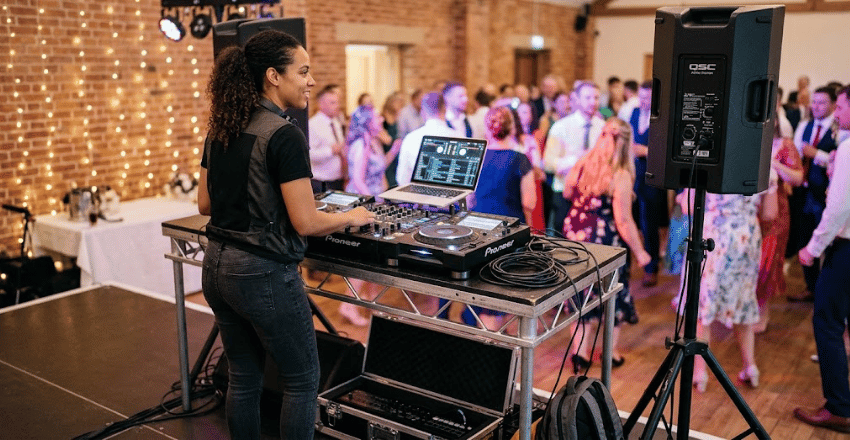
DJ insurance isn’t usually a single standardized policy with identical protection from every insurer. Instead, businesses combine policies that address the risks connected with their operations. Policy wording, exclusions, limits, and deductibles determine whether a policy covers a particular loss.
A wedding performer carrying speakers into a hotel faces several potential exposures. A guest could trip over a cable, or equipment could damage property during setup. Expensive gear could also be stolen or damaged while traveling between events.
General Liability
General liability commonly covers claims involving third-party bodily injury or property damage caused by business operations. Imagine a guest trips over a secured cable and gets hurt. A covered claim could include medical costs, legal expenses, or a settlement, depending on the policy terms.
This coverage also matters because event venues often require proof before load-in. The United States Disc Jockey Association requires certain professional membership levels to carry liability insurance. Its published standard specifies at least $1 million per occurrence and $2 million aggregate for applicable members.
Equipment and Mobile Gear Coverage
General liability typically covers harm to other people or their property. It isn’t designed to replace your own stolen controller, laptop, speakers, or lighting system. Equipment therefore deserves a separate conversation with your agent or broker.
Commercial property coverage can protect business property against specified covered losses. Mobile equipment may require inland marine or another form designed for property traveling between locations. Ask how coverage applies during storage, transit, setup, overnight parking, and active performances.
Professional Liability, Auto, Cyber, and Workers’ Compensation
Professional liability can address certain claims involving errors in services or contractual performance. The exact scope depends heavily on the policy wording and exclusions. Discuss this option when large contracts create meaningful financial exposure.
A personal auto policy may not address every business-use situation. Companies using owned vehicles to transport equipment should discuss commercial auto requirements with a licensed professional. Progressive and The Hartford both list commercial auto as a relevant coverage option for entertainment businesses.
Cyber coverage may matter when your business stores customer details or uses online booking and payment systems. Workers’ compensation becomes relevant when a company hires employees and state requirements apply. Businesses should confirm their obligations in each state where they operate.
How Much Does Coverage Cost?
There isn’t a single national price every performer pays. Published 2026 estimates for basic liability coverage vary widely by provider and risk profile. Some industry guides place basic plans at $15 to $30 per month for lower-risk operators.
Actual premiums can rise when you add equipment, higher limits, employees, vehicles, or broader services. Revenue, location, previous claims, deductibles, and selected limits can also affect the quote. Comparing equivalent limits matters more than comparing headline prices alone.
Build insurance into your operating expenses rather than treating it as an unexpected event cost. Bussinify’s guide to understanding marginal cost and business expenses offers useful context for reviewing changing business costs. Better expense tracking can make annual budgeting easier as bookings increase.
Annual Coverage vs. One-Day Policies
Short-term protection can make sense for someone performing only a few events each year. The Hartford notes that insurance providers may offer one-day or other short-duration options. Availability and terms still depend on the insurer.
Annual coverage often suits professionals who handle frequent weddings, parties, and corporate bookings. It reduces the need to arrange a separate policy before every event. Regular performers may also need to provide certificates to venues throughout the year.
Compare total yearly costs before choosing solely on convenience. In some cases, ten separate event policies could cost more than one annual policy. Your booking schedule should therefore factor into the buying decision.
Certificates of Insurance and Additional Insured Requests
A certificate of insurance, commonly called a COI, shows that a policy exists on the certificate date. Venues and corporate clients may request one before confirming or allowing an event. Your insurer or broker can normally explain how certificates are issued.
A venue might also request to be listed as an additional insured. That request is different from simply receiving a certificate. Ask your insurer whether your policy supports the requested endorsement and whether a charge applies.
Don’t wait until setup day to handle these requirements. Ask the venue what documentation it needs when you sign the contract. Early preparation can prevent administrative problems hours before guests arrive.
Event professionals frequently work alongside bartenders, planners, photographers, caterers, and venue teams. Bussinify’s guide to bartending jobs in Las Vegas shows how many independent roles can share one event space. That shared environment creates several opportunities for accidental injuries or property damage.
How to Choose the Right Policy
A low premium doesn’t help if the policy excludes the situations you regularly encounter. Start with your real operations rather than buying a generic package. Review the following details before requesting quotes:
- List every service you provide, including music, lighting, karaoke, emceeing, or photo booths.
- Calculate the replacement value of equipment you own and regularly transport.
- Record your annual bookings, revenue, employees, subcontractors, and primary service locations.
- Ask common venues what liability limits and COI requirements they expect.
- Compare deductibles, exclusions, limits, and equipment-location restrictions between quotes.
- Confirm whether rented, borrowed, stored, and transported equipment receives appropriate protection.
- Review coverage again whenever your services, gear, staff, or revenue changes.
Treat the operation as a business even if you started as a side project. Bussinify’s guide to supporting and understanding small businesses discusses several challenges independent companies face as they grow. Risk management becomes more important as equipment value and client commitments increase.
Common Coverage Gaps to Watch
One common mistake is assuming liability automatically protects all equipment. Liability generally concerns claims involving third parties, while business property requires its own protection. Check the policy instead of relying on the coverage name.
Another mistake involves assuming gear remains protected everywhere. A policy could treat equipment differently while stored, transported, left inside a vehicle, or used away from scheduled premises. Ask direct questions about each situation you encounter.
Business growth can also create new risks. Hiring assistants, buying a dedicated van, adding lighting, or storing customer data may change your insurance needs. Update your agent whenever the operation changes materially.
Marketing can also push a hobby operation into a larger business faster than expected. Bussinify’s YouTube automation business guide discusses how digital marketing and outsourced work can expand an online operation. Similar growth can increase administrative and risk-management needs for entertainment businesses.
A Pre-Gig Insurance Checklist
Review your documents several days before any large wedding, corporate function, or venue event. Confirm the policy is active and the booked services match your insured operations. Then verify that requested certificates or endorsements are complete.
Keep digital copies accessible on your phone and in your business email. Save your agent’s contact information somewhere your team can access it. Good records won’t prevent accidents, but they can reduce confusion after one occurs.
Finally, document expensive equipment with serial numbers, receipts, and current photographs. Store copies somewhere separate from the gear itself. Accurate records can make it easier to explain what was owned if you later report a covered loss.
Frequently Asked Questions
Do I Need DJ Insurance for Private Events?
You may need DJ insurance when a venue, planner, or client requires proof of coverage. Even without a contractual requirement, an accident can still create financial exposure. Your contracts and business risks should guide the decision.
Does General Liability Cover My Speakers and Controller?
General liability generally isn’t intended to insure your own equipment against theft or physical damage. Business property or mobile-equipment coverage may address those risks, depending on the policy. Always check exclusions and covered causes of loss.
Can I Buy Coverage for One Event?
Short-term and one-day policies are available in parts of the U.S. insurance market. They can suit occasional performers who don’t need year-round protection. Compare terms and total annual cost before choosing.
Why Does a Venue Ask for a Certificate of Insurance?
A COI shows that the specified insurance coverage exists at the time shown. Venues can use it to confirm that vendors meet contractual insurance requirements. They may also request particular limits or additional-insured status.
How Much Liability Coverage Should a Working DJ Carry?
No single limit fits every business or contract. Some industry organizations use $1 million per occurrence and $2 million aggregate as professional standards. Your venues, contracts, risk profile, and insurer should determine the final limits.
Protect the Business Behind the Music
Insurance can’t stop a guest from tripping or prevent every equipment problem. It can reduce the financial impact of covered events that would otherwise hit your business directly. That protection becomes more valuable as your bookings, equipment, and contractual obligations grow.
Start by listing your services, equipment value, annual events, vehicles, and staffing arrangements. Request several comparable quotes from licensed insurance professionals serving your state. Read the exclusions and policy wording before choosing coverage based on price alone.